Moot Court History and the Rise of Classroom Advocacy
Moot court history explains how simulated legal argument entered legal education and why its changing forms still help students understand advocacy.
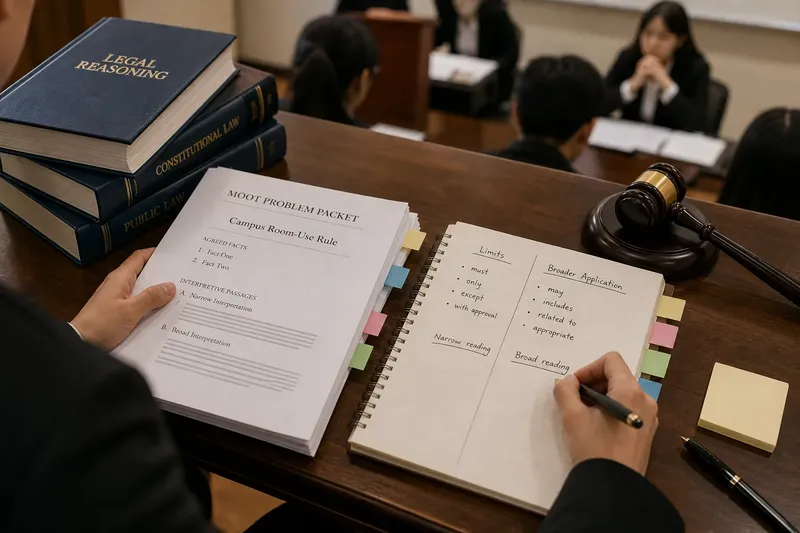
A student places a marked case beside a draft argument and waits for a classmate to begin questioning it. That familiar classroom scene is one point in moot court history, but it does not establish a single origin or one route by which the practice spread.
To describe the history responsibly, it helps to distinguish a broad teaching idea—learning through structured legal argument—from the particular formats used by different schools and legal systems. Without sources for a detailed chronology, the safer account is about the practice’s changing educational role, not a claim that every modern moot court descends from one institution or moment.
What does moot court history actually describe?
“Moot” is used in legal education for an exercise in which participants argue a legal problem under stated rules. The exercise may include written submissions, oral argument, questions from a panel, or some combination of these elements. Its exact design belongs to the course or competition that sets it.
Moot court history is therefore not simply the story of a courtroom replica. It concerns a teaching method: students take legal materials and a defined problem, then explain how a legal interpretation would apply. Different institutions can use that method without sharing an identical format or institutional history.
Why is a single origin story misleading?
Legal education varies across countries, schools, and periods. A broad description of mooting cannot by itself establish when a particular format began, which institution introduced it, or how one practice influenced another. Those claims require historical sources specific to the place and period being discussed.
For students at Trường Đại học Luật Hà Nội (HLU), this distinction matters. A classroom exercise may resemble advocacy training used elsewhere, but resemblance alone does not prove a direct historical connection. It is more precise to ask what the exercise does in the local course and what materials or rules shape it.
How did mooting become a teaching method?
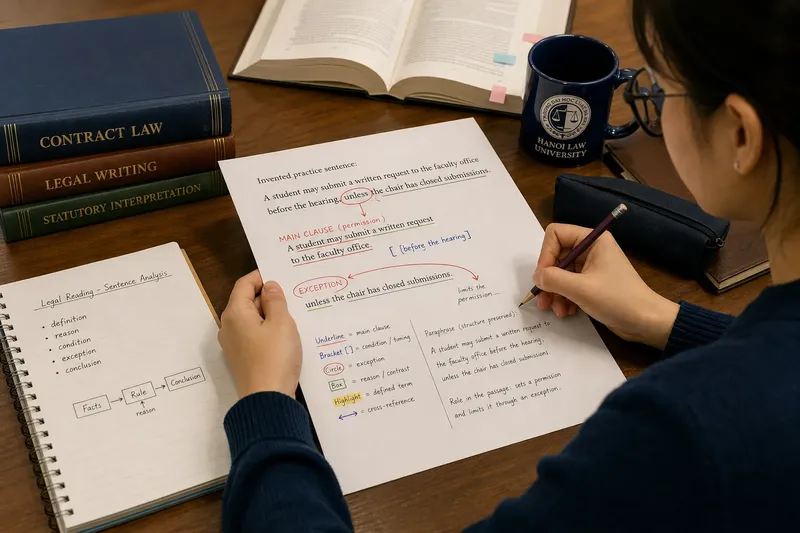
At its simplest, a moot turns legal reading into a task with an audience. Rather than only identifying a rule, a student must explain what the rule means in a particular problem and respond when someone challenges that explanation. The format makes the reasoning audible.
This account describes the educational logic of mooting, not a universal timeline. A course might use a short oral exchange, a formal panel, or written arguments followed by a hearing. Each format can teach students to organize legal reasoning, but the historical path of a particular version should be established from records of the relevant institution.
How does moot court differ from mock trial?
A moot court exercise generally centers on legal argument using an assigned problem and materials. A mock trial commonly gives more attention to evidence, witnesses, and examination. These are useful distinctions, not rigid definitions: an instructor can combine elements or define a different format for a particular course.
Before taking part, students should check the assignment. It should say which facts are fixed, what legal materials may be used, who will ask questions, and whether the exercise includes written submissions. Those details explain the exercise better than its name alone.
What should students know about moot court history?
Was moot court invented in one place?
A general account cannot support that claim without institution-specific historical evidence. Mooting has varied forms, so a careful explanation identifies the jurisdiction, school, and period it is discussing.
Does a classroom moot decide a real legal dispute?
No. It is an educational exercise governed by its assignment, not a judicial decision. Its purpose is to practice argument within the materials and procedure provided.
Why do instructors use oral argument?
Oral argument requires students to explain a position in their own words and respond to questions in real time. It also lets an instructor hear which parts of the reasoning need clarification.
What is the best source for a local history?
Look for materials tied to the institution and period, such as course records, official program histories, archival documents, or publications by qualified historians. If those sources are unavailable, describe the exercise without making a claim about its precise origins.
What does this history mean for an HLU classroom?
The useful connection is between legal education and legal language. Students do not only repeat terms from a statute or case; they have to explain how those terms work in a stated problem. A moot makes that work visible without requiring a claim that HLU follows one particular historical lineage.
Imagine an HLU seminar receives an invented packet containing a fictional campus room-use rule, two agreed facts, and two short passages with competing interpretations. One student marks the words that limit the rule; another notes the words that could apply it more broadly. They each prepare a brief argument using only the packet, then answer a question about one of the agreed facts. The observable result is that the class can identify which words and facts each interpretation relies on; if an argument depends on an unstated fact, the student can revise it or acknowledge the gap.
How can a student check a moot assignment?
These checks are useful before preparing an argument. Each result points to a practical next action.
- Check the legal question: If the prompt asks several unrelated questions, ask the instructor which issue controls; if it identifies one issue, frame your argument around that issue.
- Check the facts: If a fact is unstated or disputed, do not treat it as settled; ask whether it may be argued, and otherwise keep the argument within the agreed facts.
- Check the permitted materials: If the assignment limits sources, use only those sources unless the instructor says otherwise; if it allows additional authority, clarify how to cite it.
- Check the speaking order: If the order or time limit is unclear, ask for the procedure before preparing; if it is stated, organize the argument to fit that procedure.
- Check how questions work: If participants may be interrupted, prepare to answer and return to the argument; if questions come only at the end, plan a concise closing response.
- Check the feedback criteria: If the criteria mention only presentation, ask whether reasoning and use of authority are also assessed; if they do, use those criteria to revise the argument.
Moot court history is clearest when it separates what can be said about a teaching method from what needs local historical evidence. For HLU students, that distinction offers a useful habit: identify the source, state what the assignment establishes, and make the reasoning between them explicit.